

India’s Higher Education: A Titan in Transition
India’s higher education system is one of the world’s largest, with over 36 million students enrolled across 900+ universities and 40,000 colleges. Yet, beneath this impressive scale lies a system grappling with profound challenges while undergoing its most ambitious transformation in decades.
The Promise and the Problem
The sector’s sheer size represents immense potential for driving innovation and economic growth. However, critical issues constrain its quality and impact. The Gross Enrolment Ratio (GER), though rising, remains near 27%, well below many developing nations, highlighting access barriers. A severe faculty shortage, outdated curricula, and inadequate infrastructure—especially in rural areas—compromise learning outcomes. Most critically, a persistent skills mismatch has led to low graduate employability, undermining the system’s core promise of social and economic mobility.
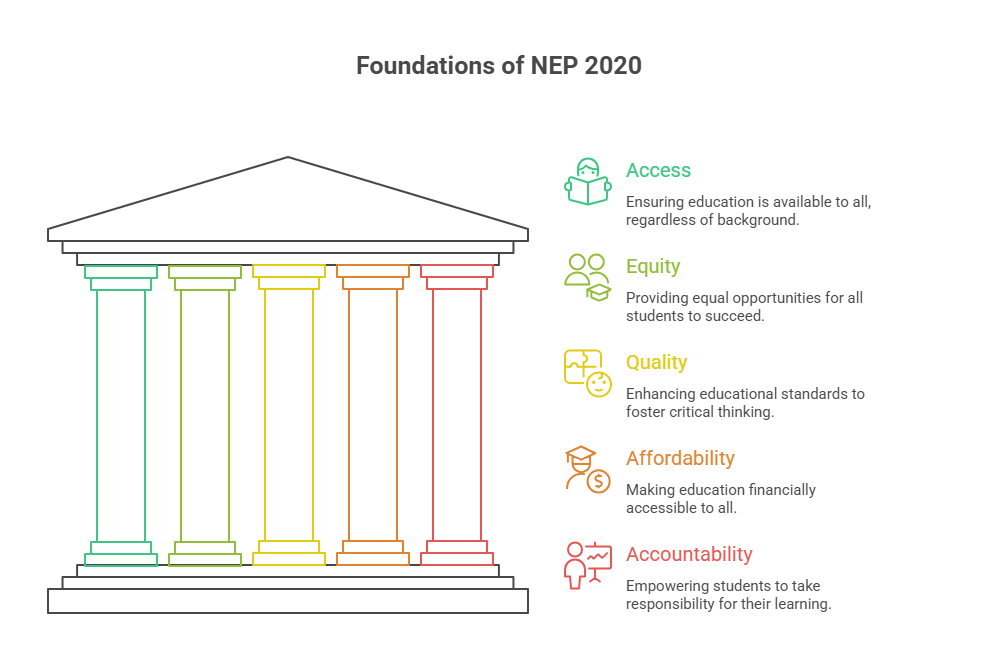
The Reform Agenda: NEP 2020 as a Catalyst
The landmark National Education Policy (NEP) 2020 is the central framework for change. It aims to radically reshape higher education by:
- Promoting Flexibility: Introducing 4-year multidisciplinary undergraduate programs with multiple exit points and a digital Academic Bank of Credits to enable student mobility.
- Boosting Access & Inclusion: Targeting a 50% GER by 2035 and strongly emphasizing equity for marginalized communities.
- Integrating Technology: Leveraging platforms like SWAYAM for online learning and encouraging tech-infused pedagogy.
- Fostering Global Competence: Through initiatives like Study in India and the Global Initiative of Academic Networks (GIAN).
Supporting Pillars of Change
Complementing the NEP are key operational programs:
- Rashtriya Uchchatar Shiksha Abhiyan (RUSA) provides strategic funding to upgrade state universities.
- The National Institutional Ranking Framework (NIRF) creates a culture of competition and quality assessment.
- The proposed Higher Education Commission of India (HECI) aims to consolidate regulation under a single, facilitative body.
The Road Ahead
The vision is clear: to evolve from a rigid, siloed system to a dynamic, student-centric ecosystem that values critical thinking and employability. Realizing this vision depends on effective implementation—translating policy into practice across thousands of diverse institutions. Success will require sustained investment, massive faculty development, and closing the stark digital and resource divide between institutions.
India stands at an educational crossroads. If it can effectively harness its scale through these reforms, its higher education system can transform from a giant in numbers to a global leader in quality and innovation.
References:
- AISHE Reports: Annual Ministry of Education surveys providing official statistics on enrollment, institutions, and infrastructure.
- National Education Policy 2020: The foundational government policy document outlining the comprehensive reform agenda for education.
- RUSA Framework: Government scheme details for strategic funding and development of state higher education institutions.
- NIRF Methodology & Results: Official portal for the annual ranking system of Indian educational institutions.
- SWAYAM Platform: The official website for India’s national massive open online course (MOOC) initiative.